Tuesday, May 13, 2014

Random Paragraph #2

Wrote this after reading a fascinating chapter on universal order and entropy from Paul Davies's "The Origin Of Life". 


Physicists worldwide are reluctantly conceding that the more man pushes forth the frontiers of the natural sciences and inquires into the structure of the universe, the less it seems to make 'sense'. This is to say that there appears to be a complete breakdown of order the deeper we move into nature. The second law of thermodynamics is receiving scientific reverence like never before, and consequently, chaos is now seen to be inherent in the very fabric of space-time.

Also, the cosmos of myriad spiraling galaxies containing billions of stars gives in to its counterpart, chaos, not only (seemingly) at the subatomic level, but also in matters concerning the human psyche. The excessive and exorbitant violence of the thermonuclear furnaces of deep space is in stark contrast with the seed of violence that seems to have germinated in the human mind. The former is a violence that maintains and propagates order; the latter is the source of a chaotic sub-universe incapable of even comprehending order, much less of forming it.

Control is one concept that crops up while delving into this problem. After all, we've always confused control with what we call 'order'. Yet, we can argue that they are, in fact, poles apart. Control is always localized, disparate; order knows no boundaries. Control springs forth from a source and requires a controller, whereas order simply is. This quandary also explains our eternal obsession with proving or disproving the existence of a God, rather than seeing that the creation and the 'creator' are inseparable. 

Random Paragraph

The following is a paragraph that I originally wrote at 2 A.M. one morning amidst a bout of frenzy-filled insomnia. 

Between the sky-high cliffs, in the midst of gushing, turbulent waters, lies the entrance to the interior of the mountain, where untold treasures await discovery. The ambiance in this region is electric with an awe-inspiring mystery to it, and the mere sight of this monument evokes in one a rapturous, almost divine, wonder for the distant past.

As one steers through the small crevice that the water cuts in between the rocks, one comes across large paintings splayed out over the inner walls of the cliff. Most of them seem to depict different species of creatures indigenous to that region . But some appear to contain peculiar abstract forms that demand closer inspection. The passage can only be navigated by moonlight, although the irregular recurrence of lamp-holders attached to the rocks suggests that the path, at some point in the primordial, may have been a well-lit one.

Friday, May 9, 2014

'On Creativity' by David Bohm (Routledge Classics)

Book Review


'On Creativity' is a collection of five essays covering topics ranging from creativity and imagination to science and order, authored by renowned 20th century philosopher and theoretical physicist David Bohm.

1) On creativity - Bohm starts off his book by taking on one of the most ambitious and formidable questions in the history of human thought : What is creativity? He begins by taking the case of a scientist, and talks about how conventional thinking suggests that scientific creativity is only contained in the invention of new machines and in the derivation of mathematical formulae. He questions this popular definition of creativity and appends it by saying that the juice of scientific creativity lies in the discovery and perception of order in the universe. At this point, Bohm challenges the notion of the very existence of disorder. "What is commonly called 'disorder'", he writes, "is merely an inappropriate name for what is actually a certain rather complex kind of order that is difficult to describe in full detail."(A statement that clearly reflects Bohm's unorthodox views on Quantum Mechanics.) 

All problems and confusion arise, then, not from disorder, but from a clash of different orders unable to work together. In other words, a breach in 'harmony'. The solution to this lies in a deep and penetrating human insight that stretches far beyond memory and knowledge accumulated over the years. According to Bohm, this insight cannot be reached by thought. The source of this insight, he then reasons, must be complete attention to the entire movement of thought. Readers familiar with the Krishnamurti-Bohm correspondences will clearly see K's influence on Bohm's thought here. He concludes the essay by saying that the act of perceiving this movement is the birthing ground of true originality and creativity, which go far beyond the limited fields of science and art, and concern human society as a whole.


                                        [To be continued]

Tuesday, May 6, 2014

La Soufriere (Werner Herzog, 1976)

Movie Review


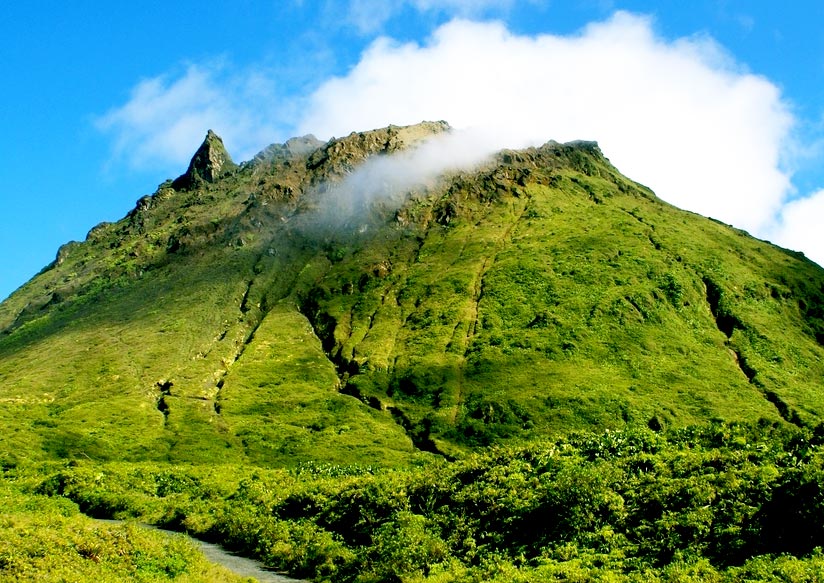
As the camera slowly hovers over the lush green expanse of the mountain, its slopes caressed by a constant flux of toxic gases, the faint sounds of trickling streams and rivulets give way to a foreboding piece of classical music, which gradually diminishes as the camera now switches to a poor peasant lying at the base of the mountain. This short 60-odd second segment appears about halfway through Werner Herzog's "La Soufriere", and at this point in the picture the viewer is left in no doubt with regards to the critical acclaim that it has garnered.


All of 30 minutes in its total runtime, "La Soufriere" is a visual report shot in 1976 documenting the impending eruption of the eponymous caldera, located on the island of Saint Vincent in the Windward islands of the Caribbean. Towards the end of August in that year, it had become clear to volcanologists that an earth-shattering explosion, "possessing the power of 5 or 6 atomic bombs", was inevitable. Thus, 75,000 inhabitants comprising the whole southern part of the island were evacuated. That is, except 3 impoverished peasants near the slope of the mountain, who refused to be evacuated against all odds. Mr. Herzog, ever on the look-out for eccentric environments and even more eccentric characters, seized the opportunity to travel to the island, churning out a valuable piece of art in the process.

Upon arrival into the town, Herzog spends some time filming the streets in the full glory of their eerily complete desolation, now and then focusing on eerie aspects such as still-running traffic lights and television sets, a bunch of clueless pigs, a pair of donkeys wandering aimlessly, and the rotting carcasses of starved dogs. A true depiction of a ghost town, "almost resembling a spooky science fiction locale", that rivals any fictional counterpart ever captured on celluloid at the time. Add to this Herzog's restrained and gracious monologue, and it's impossible not to share his sense of awe for the grandiosity of nature. Going one step further, in a trademark breach of laws and circumvention of roadblocks, the team ascends the mountain, and casually films an active volcano while standing right on top of it.

But the juice of the film comes later, with the introduction of our three adamant protagonists. The first one is found sleeping at the foothills of the mountain, and when interviewed, exhibits not a shred of fear, inspite of being fully aware of the gravity of the situation. He says that he has found his inner peace, and is ready to embrace death. The same goes for the other two equally nonchalant natives. The brief scene with the folk song is a nice touch, providing a strong contrast against the looming peril. It is interesting to note here that Herzog dubs both, his own questions, and the peasants' answers, in his own voice. It is one of those things that separates this film from your standard Nat-Geo fare, with Herzog the observer stretching himself to become one with the observed in his pursuit of "ecstatic truth".

The volcano never erupts, however, and for another filmmaker in Herzog's place, this would have been a major let-down. Instead, the film takes on a fresh sense of irony, as well as of humanity. As the film ends along the notes of a loud and triumphant orchestral piece, Herzog narrates : "In my memory, it is not the volcano that remains, but the neglect and oblivion in which those black people lived."

One of the Bavarian Auteur's overlooked gems.

No Man's Land (Danis Tanovic, 2001)

Movie Review


The madness and violence that throng the planet during war have provided inspiration for many a piece of art. Throughout the ages, countless artists have expressed their bitter frustration towards humanity's never-ending apetite for war and the inevitable mayhem that ensues. Danis Tanovic's No Man's Land is one such work of art; it is a film depicting how the continual strife between Bosnia and Serbia, or just conflict in general, takes man to increasingly high levels of insanity. 

The film opens at sometime past midnight, with a regiment of the Bosnian relief troops gradually making its way towards the Bosnian side of the border. At the break of dawn, they realise that, in the dark, they had unknowingly faltered onto the Serbian front. Before they know it, they are pelted with bullets and shells coming from the Serbs that leave all 
but one dead. Soon, the lone survivor (or so it seems) is soon joined by his Serbian counterpart. In yet another complicated turn of events, a third soldier, hitherto presumed to be dead, becomes a living booby trap, making survival all the more difficult for the trio. 

Right from the first frames of the film, Writer-Director Tanovic establishes the film as a thriller in a war-torn setting; later, however, it becomes increasingly obvious that the beneath the mould of an edge-of-the-seat thrill ride lie themes which percolate much deeper than your average war film, themes pertaining to issues that were and still are pervasive across the globe. And, although this is the primary focus of any film depicting war, this one in particular takes a far more interesting route to get its point across. Dry humour and witty jokes/oneliners make up a major part of the script, as do the disturbing and thought-provoking undertones. Branko Djuric and Rene Bitorajac are both brilliant and entirely convincing as the rough, doubting Ciki and the young, inexperienced and genial Nino respectively. 


Inspite of having such a claustrophobic setting, the film retains its momentum throughout its relatively short runtime of 98 minutes, owing to a smart script,and crisp editing. My only gripe with the film is that the relationship between Ciki and Nino, although beautifully and effortlessly developed through the film, culminates in a stacatto-ic manner that is both abrupt, and rather inconclusive. 

No Man's Land is a film that highly resembles Kubrick's "Dr.Strangelove" : It's one part humorous and laugh-out-loud comedy, one part engaging character drama, and three parts a stingingly satirical farce on the inanity of war and humanity's inability to accept responsibility for its own follies. It is also a brutally honest portrait of the hypocrisies that plague the world today, a piece of theatre every bit as moving and harrowing as it is unapologetically cynical.

The Town (Ben Affleck, 2010)

Movie Review


In 2007, Ben Affleck's directorial debut, Gone Baby Gone released to a roaring reception of critical praise, baffling audiences worldwide with its presentation of a true moral dilemma. 

This year the actor returns with "The Town", his sophomoric project in the director's chair, based on the novel "Prince of Thieves" by Chuck Hogan. 

The heist film has always had its share of avid followers and admirers. And not for nothing; the heist film has constantly evolved right from the inception of cinema itself. Right from the amateurly choreographed sequences of "The Great Train Robbery", the act of stripping people of their fortunes and the dire consequences that the perpetrators face has been exemplified by the witty dialogue of "Reservoir Dogs", the ascending tension in "Dog Day Afternoon", the slickness of "Inside Man" and the "Oceans" series, and the mind-bending ingenuity of "Inception". 


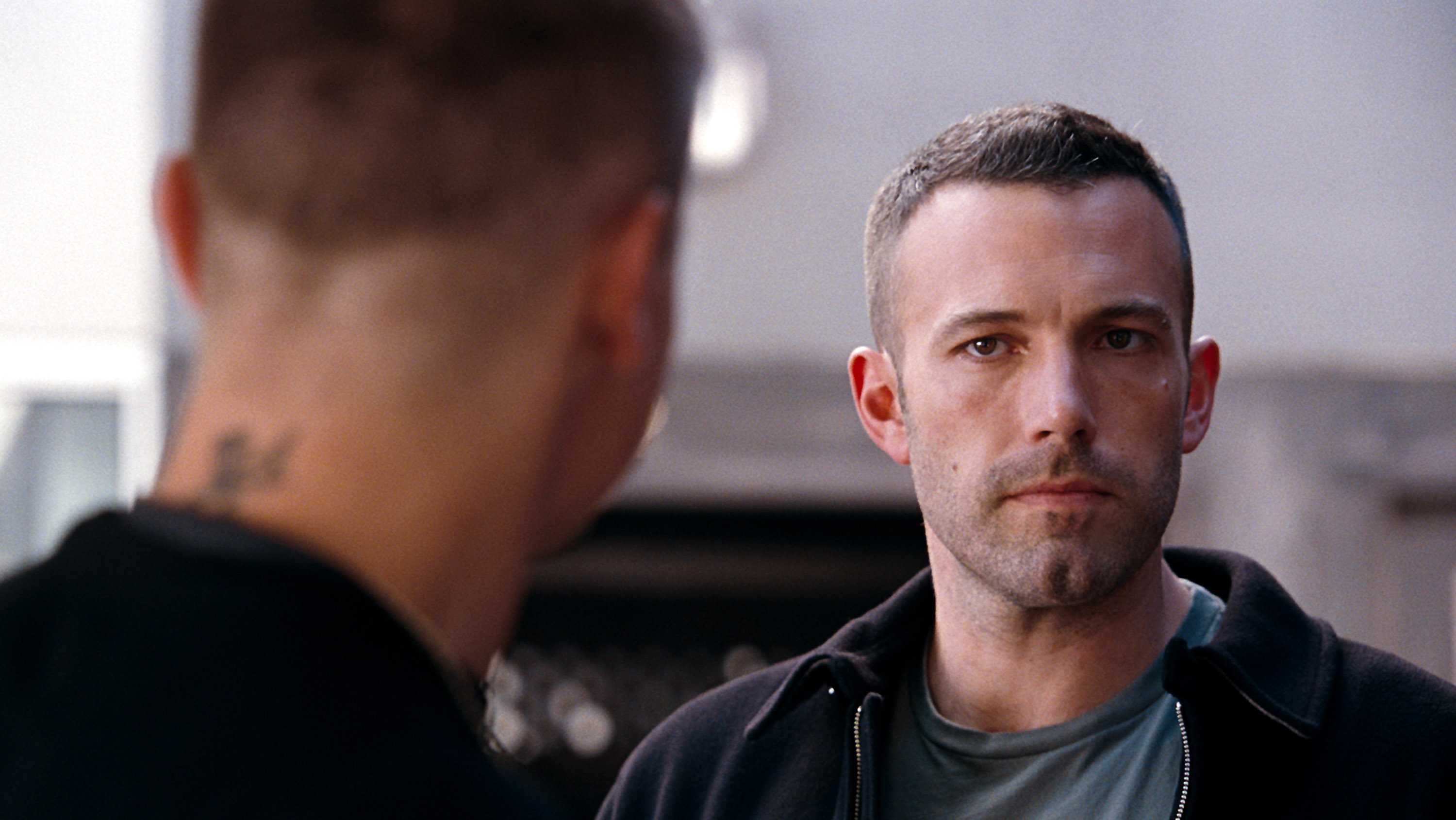
Although "The Town" is primarily based on a work of fiction, it is also a reflection on the real-life community of a town in Boston. The Charlestown neighborhood of Boston is renowned for churning out a high number of armed robbers, generation after generation. These robbers never leave their Charlestown life on their own volition, the neighborhood where there is an unwritten code to protect that lifestyle. One such gang, headed by Doug MacRay (Ben Affleck), takes a bank manager (Rebecca Hall) hostage during one of their heists, releases her after the job is done, and decides to keep an eye on her in the days following the robbery. This results in a relationship between the unknowing manager and Doug. As he plans his next job, Doug tries to balance his feelings for the bank manager , as well as the FBI agent looking to bring him and his crew down. 

The first thing that one notices about the film is its unrelenting pace. The movie effortlessly zooms through the events, right from the opening heist to the climax, while never giving up its hold over the audience. The dialogue is well-written, and so is each character. This character development also finds its roots in the emphatic and palpable performances of all the actors, especially Jeremy Renner, who is nothing short of brilliant as the trigger-happy and psychopathic Jem. In one particular scene, Renner beautifully transforms his character from the gun-toting, malicious goon to a caring uncle and responsible brother.Although hitherto never acclaimed for his acting chops, Affleck is not far behind, with this being perhaps the best performance of his career. One can only admire his abilities as his face reflects the constant turmoil and tragedy that looms threateningly over the characters. 

The one flaw apparent on the first viewing of "The Town" is the forced and anti-climatic conclusion to the story. Perhaps this is because the theatrical cut was cut down to 2hrs from the original 4hrs. Also, the ending of the novel is different from that in the movie. This may explain the abruptness and over-the-topness of the ending. Which is a pity, considering the power-packed conclusion to Affleck's first film. 

Final Verdict : But for a few tweaks here and there, and a different approach in executing the last act, The Town would have been an excellent crime drama, on par with movies like "Heat" and "Dog Day Afternoon". However, it is still a very well-made film and an absolute must-see for all Affleck fans. 

Mary and Max (Adam Elliot, 2009)

Movie Review

Mary And Max is another addition to the versatile and sumptuous offering of this year's animated feature films. 

The movie employs the lesser-used animation technique of stop-motion with the help of clay models. And, as painstakingly as this movie must have been made, as poignantly and comically effective it is. 


Mary & Max tells the story of two distant pen-pals, an 8 yr old girl and a 44 yr old man, who share the common experience of loneliness, and alienation from society for having some very unusual traits. What follows is a gushing flow of emotion from one to the other, from the remorse of old age, to the inquisitiveness of youth, from 'sexing' to chocolate hot-dogs. All this by the mere use of clay models. 

Emotionally touching, and with very imaginative concepts and visualizations, Mary & Max is a treat for the more matured of the demographic.