Tuesday, May 13, 2014

Random Paragraph #2

Wrote this after reading a fascinating chapter on universal order and entropy from Paul Davies's "The Origin Of Life". 


Physicists worldwide are reluctantly conceding that the more man pushes forth the frontiers of the natural sciences and inquires into the structure of the universe, the less it seems to make 'sense'. This is to say that there appears to be a complete breakdown of order the deeper we move into nature. The second law of thermodynamics is receiving scientific reverence like never before, and consequently, chaos is now seen to be inherent in the very fabric of space-time.

Also, the cosmos of myriad spiraling galaxies containing billions of stars gives in to its counterpart, chaos, not only (seemingly) at the subatomic level, but also in matters concerning the human psyche. The excessive and exorbitant violence of the thermonuclear furnaces of deep space is in stark contrast with the seed of violence that seems to have germinated in the human mind. The former is a violence that maintains and propagates order; the latter is the source of a chaotic sub-universe incapable of even comprehending order, much less of forming it.

Control is one concept that crops up while delving into this problem. After all, we've always confused control with what we call 'order'. Yet, we can argue that they are, in fact, poles apart. Control is always localized, disparate; order knows no boundaries. Control springs forth from a source and requires a controller, whereas order simply is. This quandary also explains our eternal obsession with proving or disproving the existence of a God, rather than seeing that the creation and the 'creator' are inseparable. 

Random Paragraph

The following is a paragraph that I originally wrote at 2 A.M. one morning amidst a bout of frenzy-filled insomnia. 

Between the sky-high cliffs, in the midst of gushing, turbulent waters, lies the entrance to the interior of the mountain, where untold treasures await discovery. The ambiance in this region is electric with an awe-inspiring mystery to it, and the mere sight of this monument evokes in one a rapturous, almost divine, wonder for the distant past.

As one steers through the small crevice that the water cuts in between the rocks, one comes across large paintings splayed out over the inner walls of the cliff. Most of them seem to depict different species of creatures indigenous to that region . But some appear to contain peculiar abstract forms that demand closer inspection. The passage can only be navigated by moonlight, although the irregular recurrence of lamp-holders attached to the rocks suggests that the path, at some point in the primordial, may have been a well-lit one.

Friday, May 9, 2014

'On Creativity' by David Bohm (Routledge Classics)

Book Review


'On Creativity' is a collection of five essays covering topics ranging from creativity and imagination to science and order, authored by renowned 20th century philosopher and theoretical physicist David Bohm.

1) On creativity - Bohm starts off his book by taking on one of the most ambitious and formidable questions in the history of human thought : What is creativity? He begins by taking the case of a scientist, and talks about how conventional thinking suggests that scientific creativity is only contained in the invention of new machines and in the derivation of mathematical formulae. He questions this popular definition of creativity and appends it by saying that the juice of scientific creativity lies in the discovery and perception of order in the universe. At this point, Bohm challenges the notion of the very existence of disorder. "What is commonly called 'disorder'", he writes, "is merely an inappropriate name for what is actually a certain rather complex kind of order that is difficult to describe in full detail."(A statement that clearly reflects Bohm's unorthodox views on Quantum Mechanics.) 

All problems and confusion arise, then, not from disorder, but from a clash of different orders unable to work together. In other words, a breach in 'harmony'. The solution to this lies in a deep and penetrating human insight that stretches far beyond memory and knowledge accumulated over the years. According to Bohm, this insight cannot be reached by thought. The source of this insight, he then reasons, must be complete attention to the entire movement of thought. Readers familiar with the Krishnamurti-Bohm correspondences will clearly see K's influence on Bohm's thought here. He concludes the essay by saying that the act of perceiving this movement is the birthing ground of true originality and creativity, which go far beyond the limited fields of science and art, and concern human society as a whole.


                                        [To be continued]

Tuesday, May 6, 2014

La Soufriere (Werner Herzog, 1976)

Movie Review


As the camera slowly hovers over the lush green expanse of the mountain, its slopes caressed by a constant flux of toxic gases, the faint sounds of trickling streams and rivulets give way to a foreboding piece of classical music, which gradually diminishes as the camera now switches to a poor peasant lying at the base of the mountain. This short 60-odd second segment appears about halfway through Werner Herzog's "La Soufriere", and at this point in the picture the viewer is left in no doubt with regards to the critical acclaim that it has garnered.


All of 30 minutes in its total runtime, "La Soufriere" is a visual report shot in 1976 documenting the impending eruption of the eponymous caldera, located on the island of Saint Vincent in the Windward islands of the Caribbean. Towards the end of August in that year, it had become clear to volcanologists that an earth-shattering explosion, "possessing the power of 5 or 6 atomic bombs", was inevitable. Thus, 75,000 inhabitants comprising the whole southern part of the island were evacuated. That is, except 3 impoverished peasants near the slope of the mountain, who refused to be evacuated against all odds. Mr. Herzog, ever on the look-out for eccentric environments and even more eccentric characters, seized the opportunity to travel to the island, churning out a valuable piece of art in the process.

Upon arrival into the town, Herzog spends some time filming the streets in the full glory of their eerily complete desolation, now and then focusing on eerie aspects such as still-running traffic lights and television sets, a bunch of clueless pigs, a pair of donkeys wandering aimlessly, and the rotting carcasses of starved dogs. A true depiction of a ghost town, "almost resembling a spooky science fiction locale", that rivals any fictional counterpart ever captured on celluloid at the time. Add to this Herzog's restrained and gracious monologue, and it's impossible not to share his sense of awe for the grandiosity of nature. Going one step further, in a trademark breach of laws and circumvention of roadblocks, the team ascends the mountain, and casually films an active volcano while standing right on top of it.

But the juice of the film comes later, with the introduction of our three adamant protagonists. The first one is found sleeping at the foothills of the mountain, and when interviewed, exhibits not a shred of fear, inspite of being fully aware of the gravity of the situation. He says that he has found his inner peace, and is ready to embrace death. The same goes for the other two equally nonchalant natives. The brief scene with the folk song is a nice touch, providing a strong contrast against the looming peril. It is interesting to note here that Herzog dubs both, his own questions, and the peasants' answers, in his own voice. It is one of those things that separates this film from your standard Nat-Geo fare, with Herzog the observer stretching himself to become one with the observed in his pursuit of "ecstatic truth".

The volcano never erupts, however, and for another filmmaker in Herzog's place, this would have been a major let-down. Instead, the film takes on a fresh sense of irony, as well as of humanity. As the film ends along the notes of a loud and triumphant orchestral piece, Herzog narrates : "In my memory, it is not the volcano that remains, but the neglect and oblivion in which those black people lived."

One of the Bavarian Auteur's overlooked gems.

No Man's Land (Danis Tanovic, 2001)

Movie Review


The madness and violence that throng the planet during war have provided inspiration for many a piece of art. Throughout the ages, countless artists have expressed their bitter frustration towards humanity's never-ending apetite for war and the inevitable mayhem that ensues. Danis Tanovic's No Man's Land is one such work of art; it is a film depicting how the continual strife between Bosnia and Serbia, or just conflict in general, takes man to increasingly high levels of insanity. 

The film opens at sometime past midnight, with a regiment of the Bosnian relief troops gradually making its way towards the Bosnian side of the border. At the break of dawn, they realise that, in the dark, they had unknowingly faltered onto the Serbian front. Before they know it, they are pelted with bullets and shells coming from the Serbs that leave all 
but one dead. Soon, the lone survivor (or so it seems) is soon joined by his Serbian counterpart. In yet another complicated turn of events, a third soldier, hitherto presumed to be dead, becomes a living booby trap, making survival all the more difficult for the trio. 

Right from the first frames of the film, Writer-Director Tanovic establishes the film as a thriller in a war-torn setting; later, however, it becomes increasingly obvious that the beneath the mould of an edge-of-the-seat thrill ride lie themes which percolate much deeper than your average war film, themes pertaining to issues that were and still are pervasive across the globe. And, although this is the primary focus of any film depicting war, this one in particular takes a far more interesting route to get its point across. Dry humour and witty jokes/oneliners make up a major part of the script, as do the disturbing and thought-provoking undertones. Branko Djuric and Rene Bitorajac are both brilliant and entirely convincing as the rough, doubting Ciki and the young, inexperienced and genial Nino respectively. 


Inspite of having such a claustrophobic setting, the film retains its momentum throughout its relatively short runtime of 98 minutes, owing to a smart script,and crisp editing. My only gripe with the film is that the relationship between Ciki and Nino, although beautifully and effortlessly developed through the film, culminates in a stacatto-ic manner that is both abrupt, and rather inconclusive. 

No Man's Land is a film that highly resembles Kubrick's "Dr.Strangelove" : It's one part humorous and laugh-out-loud comedy, one part engaging character drama, and three parts a stingingly satirical farce on the inanity of war and humanity's inability to accept responsibility for its own follies. It is also a brutally honest portrait of the hypocrisies that plague the world today, a piece of theatre every bit as moving and harrowing as it is unapologetically cynical.

The Town (Ben Affleck, 2010)

Movie Review


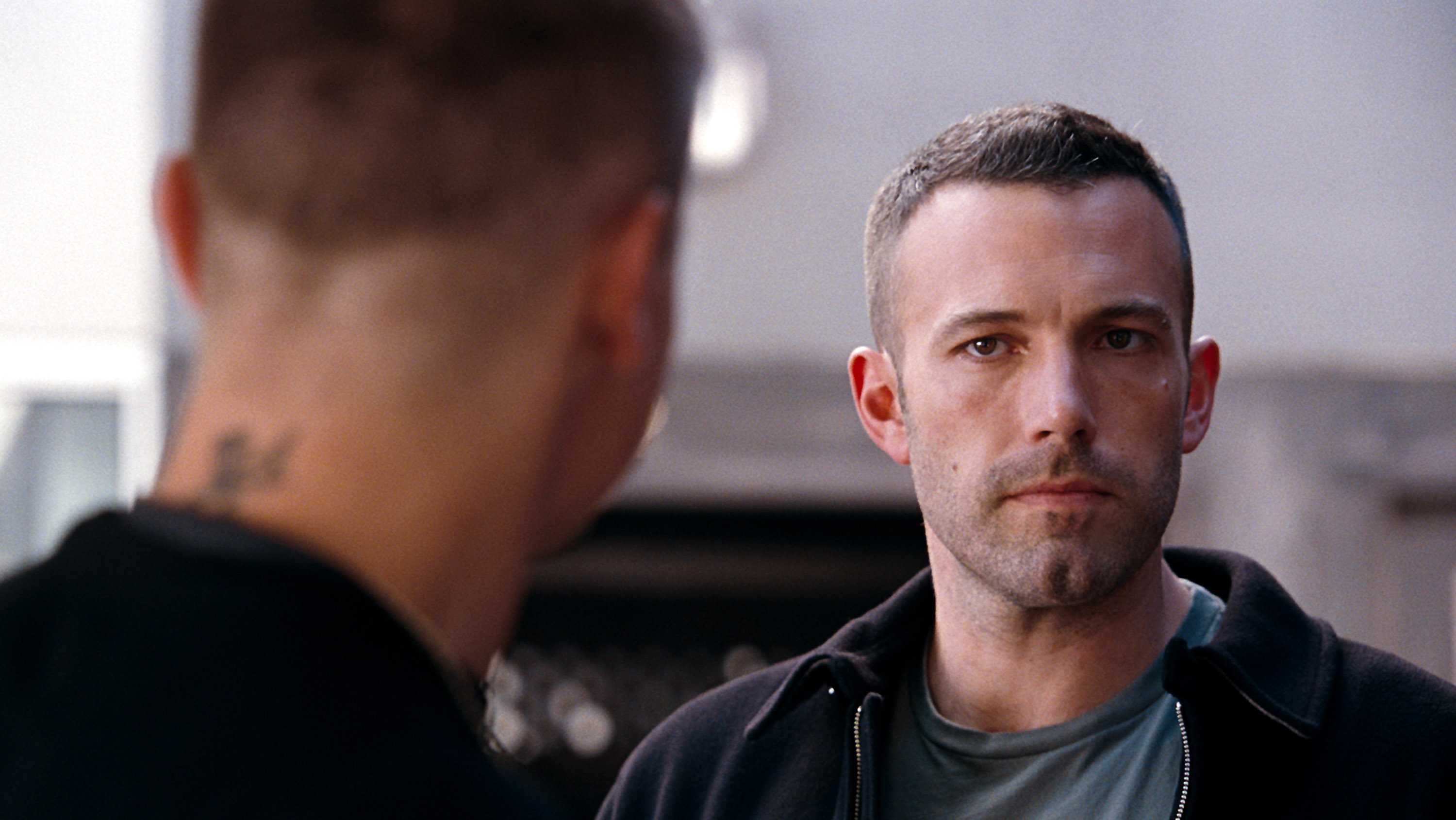
In 2007, Ben Affleck's directorial debut, Gone Baby Gone released to a roaring reception of critical praise, baffling audiences worldwide with its presentation of a true moral dilemma. 

This year the actor returns with "The Town", his sophomoric project in the director's chair, based on the novel "Prince of Thieves" by Chuck Hogan. 

The heist film has always had its share of avid followers and admirers. And not for nothing; the heist film has constantly evolved right from the inception of cinema itself. Right from the amateurly choreographed sequences of "The Great Train Robbery", the act of stripping people of their fortunes and the dire consequences that the perpetrators face has been exemplified by the witty dialogue of "Reservoir Dogs", the ascending tension in "Dog Day Afternoon", the slickness of "Inside Man" and the "Oceans" series, and the mind-bending ingenuity of "Inception". 


Although "The Town" is primarily based on a work of fiction, it is also a reflection on the real-life community of a town in Boston. The Charlestown neighborhood of Boston is renowned for churning out a high number of armed robbers, generation after generation. These robbers never leave their Charlestown life on their own volition, the neighborhood where there is an unwritten code to protect that lifestyle. One such gang, headed by Doug MacRay (Ben Affleck), takes a bank manager (Rebecca Hall) hostage during one of their heists, releases her after the job is done, and decides to keep an eye on her in the days following the robbery. This results in a relationship between the unknowing manager and Doug. As he plans his next job, Doug tries to balance his feelings for the bank manager , as well as the FBI agent looking to bring him and his crew down. 

The first thing that one notices about the film is its unrelenting pace. The movie effortlessly zooms through the events, right from the opening heist to the climax, while never giving up its hold over the audience. The dialogue is well-written, and so is each character. This character development also finds its roots in the emphatic and palpable performances of all the actors, especially Jeremy Renner, who is nothing short of brilliant as the trigger-happy and psychopathic Jem. In one particular scene, Renner beautifully transforms his character from the gun-toting, malicious goon to a caring uncle and responsible brother.Although hitherto never acclaimed for his acting chops, Affleck is not far behind, with this being perhaps the best performance of his career. One can only admire his abilities as his face reflects the constant turmoil and tragedy that looms threateningly over the characters. 

The one flaw apparent on the first viewing of "The Town" is the forced and anti-climatic conclusion to the story. Perhaps this is because the theatrical cut was cut down to 2hrs from the original 4hrs. Also, the ending of the novel is different from that in the movie. This may explain the abruptness and over-the-topness of the ending. Which is a pity, considering the power-packed conclusion to Affleck's first film. 

Final Verdict : But for a few tweaks here and there, and a different approach in executing the last act, The Town would have been an excellent crime drama, on par with movies like "Heat" and "Dog Day Afternoon". However, it is still a very well-made film and an absolute must-see for all Affleck fans. 

Mary and Max (Adam Elliot, 2009)

Movie Review

Mary And Max is another addition to the versatile and sumptuous offering of this year's animated feature films. 

The movie employs the lesser-used animation technique of stop-motion with the help of clay models. And, as painstakingly as this movie must have been made, as poignantly and comically effective it is. 


Mary & Max tells the story of two distant pen-pals, an 8 yr old girl and a 44 yr old man, who share the common experience of loneliness, and alienation from society for having some very unusual traits. What follows is a gushing flow of emotion from one to the other, from the remorse of old age, to the inquisitiveness of youth, from 'sexing' to chocolate hot-dogs. All this by the mere use of clay models. 

Emotionally touching, and with very imaginative concepts and visualizations, Mary & Max is a treat for the more matured of the demographic.

Sunday, May 4, 2014

Inception (Christopher Nolan, 2010)

Movie Review


"....Is all that we see or seem 
But a dream within a dream?" 


Edgar Allan Poe's poignantly evocative poem about a life caught up in an endless tragedy appears to have found an unusual inspiration in one of the central characters featured in the recently released science-fiction blockbuster, Inception. Helmed by critically and popularly acclaimed director Christopher Nolan, the film gathered a considerable amount of hype in the months preceeding its release, which, given the consistent filmography of the director, seems perfectly justifiable. 

Inception stars Leonardo Dicaprio as Dom Cobb ( His name is a reference to the double-crossing crook from Following ), a highly skilled "extractor" who enters people's subconcious and steals valuable information for his clients. After striking a deal with business tycoon Saito (Ken Wantanabe), Cobb prepares his team for one final heist. The film then introduces a sub-plot that has Cobb greiving for his dead wife Mal (Marion Cotillard) and wallowing in his memories of her, and at the same time rooting for his now estranged children. 

In presenting the movie as a science-fiction crowd-pleaser, Nolan leaves no stone unturned. Even before the first frame of the movie presents itself, the blaring horns in the background score set the tone of the movie, foreshadowing its tense thrills and action. In the next hour or so, The film steadily builds up its rather complicated premise with much ease. Here is where one of the few flaws of Inception crops up; Nolan refrains from the use of a creative narrative, and instead uses plain and monotonous dialogue to explain each and every element of his plot, so much so that at times, it almost carries the feel of a college lecture. Still, the pace carries the movie forward and prevents it from becoming anything short of exciting. 

The Cinematography by Nolan regular Wally Pfister, along with.the set-pieces for the dream sequences, is spectacular. Some of the visual detailing in the film seems to have been purposefully left under-rendered, so as to give off a dream-like vibe. Not even close to David Lynch, though. 

Christopher Nolan isn't the ideal choice when it comes to filming action, but with Inception, he makes an exception. The action is gritty ,slick and unusually riveting, unlike the clumsy combat sequences from The Dark Knight. Nolan succeeds in making us feel the thrill and the tension before each operation in the movie. A sequence in the movie where 
Arthur(Gordon-Levitt) engages in an bone-crunching fist-fight with a couple of bad guys in shifting gravity is sure to be remembered as one of the best action scenes of all time. 

Another interesting observation is the time-warping technique. Unlike his earlier films, most of which boast of a non-linear narrative, Nolan creates a linear but warped temporal setting. This comes off as an inventive and refreshing technique, at the same time making the screenplay much more slick and efficient. It also supports the concept of relativity of time and space, which few movies do as effectively. 

Professional reviewers and critics will find that their attempts to establish the film as a philosophical musing or even as an allegory will only be rife with empty speculations. Although Nolan does emphasize themes of regret, lost love and of course, the interpretativeness of reality, it seems more of a been there, done that thing. Nolan had already questioned the nature of truth and what is 'real'with "Memento" and "The Prestige", so this time around, it feels more like a recurring theme than an original idea. 

In the end, however, it's the entertainment that counts (for the Nolanites, at least), and that one finds bucketfuls of in Inception. 

Friday, May 2, 2014

District 9 (Neill Blomkamp, 2009)

Movie Review

Finally putting an end to a tiring chain of mindless "Science Fiction" movies like the Transformers films and the recently released G.I.JOE film, director Neill Blomkamp provides movie-goers with a bizzare but power-packed experience with his debut film, District 9. 

District 9 is the name allocated to a large refugee camp in Johannesburg, South Africa, which is used solely for the purpose of accomodating a horde of extra-terrestrial creatures from a starship which had mysteriously appeared over the city in 1990. The aliens are forced to live in slum-like conditions on earth, where they are confined and exploited inhumanely for extra-terrestrial research. In 2010, the munitions corporation, Multi-National United, is contracted to forcibly evict the population with operative Wikus van der Merwe in charge. During the operation, Wikus is accidentally exposed to an alien chemical, which leads to drastic changes in his DNA. 

The film opens with a documentary-style series of interviews that introduce the situation. This creates an atmosphere rarely before seen in sci-fi films, where the content presented almost gains a sense of realism and credibility. Gradually, however, the drama sets in, followed by the chaotic action. The audience is jolted into the very heart of District 9, and there is no character they can even slightly relate to. This is where Blomkamp gets to insert a poignant and transformative character arc, which,these days, is saying a lot for a blockbuster actioner. The shaky-cam is heavily employed, which only adds to the overall feeling of melancholy and disorder in the film. The action is intense; and even when there are no bullets flying, the brilliant visuals create a stark tension. There hardly exists a face in the film that is not completely unknown; still, Sharlto Copley's performance as Wikus van der Merwe is tangibly emphatic. 

Although not completely devoid of minor Hollywood cliches, District 9 is a brutal and electrifying experience, where even the strong violence doesn't prove to be a distraction, from the beautiful and heart-wrenching finale. The lack of subtlety in trying to establish its political correctness notwithstanding, District 9 works more as a social commentary on the apartheid than anything else. 

Zombieland (Ruben Fleischer, 2009)

Movie Review

Seriously, what is it with the Zombie Movie? Right from the thirties, this genre of film has continually enthralled as well as disgusted cinephiles with its penchant for outrageously mindless scenarios and sadistic violence/gore. Zombies have presented amateur filmmakers with seemingly justifiable excuses for failing to come up with interesting characters and a plausible storyline. 

Today, zombie moviemakers are running out of gas. After all, there's got to be a limit to the number of films you can make about a bunch of sick, undead jerks with a fetish for human flesh. For a zombie flick to stand out from amidst this unrecognizable mess, it ought to be truly different. 

Ruben Fleischer's "Zombieland" doesn't actually have much of a plot to boast of. Basically, it tells the same old story of a world infected by Zombies,a world no longer inhabitable, blah blah blah...No, the true ingenuity comes from other factors. For one, the casting choices are pitch-perfect. From Jesse Eisenberg as the paranoid college nerd "Columbus" to Woody Harrelson's cynical, twinkie-hunting psychopath, each actor seems to be firmly rooted in his or her role. And with only five major characters to speak of (not to mention one of the funniest and most effective cameos of all time), all of them are well written and have completely plausible arcs. The screenplay is tight, and so is the editing . Indeed, the crisp and quirky writing, coupled with a consistently funny dialogue and an innovative first-person narrative, is what keeps the film racing in the fifth gear. 

Zombieland isn't your average Zombie fare. It's brilliant, smart, laugh-out-loud funny, and above all it's a surprisingly palpable tale about hope, courage, love and the importance of a family to share these with. I Am Legend came close to realizing this, but it couldn't quite drive the point home. 

A thoroughly enjoyable ride . Watch it.


Oh, and yes, wear sunscreen.

The Fantastic Mr. Fox (Wes Anderson, 2009)

Movie Review

There's nothing much left to be said about this fine little film, but what the cuss, here goes: 


Wes Anderson's "Fantastic Mr. Fox" is a cussing great movie. It's one of those movies which doesn't have a cuss of hype surrounding its release, but just then, it cussing crawls up behind you and delights the cuss out of you. There's incredible random, dry humor in there, which cussing reminds you of other cussing funny cartoons like "The Simpsons" and the likes. There's also this strange, nostalgic air all around the movie on which I can't put my cussing finger right now, along with the cussing stop-motion and an all-cussing-star-cast, which easily makes this film one of the cussing best to come out this year. 


Angels and Demons (Ron Howard, 2009)

Movie Review


3 years back, director Ron Howard disappointed Dan Brown fans worldwide with his poorly made and somewhat botched-up adaptation of Brown's highly controversial but best-selling novel, The Da Vinci Code. 

Now, Howard returns with Angels and Demons, the follow-up to the fast-paced thriller. Originally written before The Da Vinci Code, the story starts out with the brutal murder of a senior physicist at CERN, Geneva, and the theft of the first-ever macroscopic sample of antimatter produced. 
Violence and mayhem ensue, as the cannister containing the antimatter is planted inside the walls of the Vatican, threatening to blow up the City of God. 

The film starts out fairly well, with Zimmer's mesmerizing track "Sangreal de Chevaliers" seuging through the opening credits. About 25 minutes in, however, the movie descends into an extremely fast-paced but shabbily put-together thriller to the end. The very break-neck speed and thrill-inducing adrenaline that made the book a bestseller translate poorly on screen. The movie soon becomes a shallow , superficial adaptation of Brown's work, by almost ignoring its main theme : the everlasting war between science and religion. A fair part of the book has been hacked off, and avid fans of the novel will find that the characters in the film have either been made to look like drastic modifications of the original ones, or have been erased entirely. Sadly, Tom Hanks too, fails to deliver this time, except for a few scenes. 

The film's only strength lies in its riveting music , composed by Hans Zimmer (which has again been blatantly overused), Ewan McGregor's subtle performance, and the colourful and fluid photography. These factors make the film mildly rewarding despite its incessant flaws. 

Although readers of the book will be disappointed, others may find Angels and Demons a slightly-above-average and occasionally entertaining popcorn thriller.

Tron: Legacy (Joseph Kosinsky, 2010)

Movie Review


Animation giant Disney has always had its fair share of peaks and troughs. Of late, however, there has been little reason to applaud the famous studios. Apart from the ridiculous amount of unabashed merchandising and the launch of cringe-worthy TV-channels, Disney has been producing some mediocre live-action family dramas/children's films throughout the past decade. 

As the film commences, we follow the progress of Kevin Flynn (an expertly digitized Jeff Bridges) as he plans to bring about a scientific revolution with his brainchild "the grid", a new milestone in free information technology. Alas, on the very eve of his discovery, he disappears. Twenty years later, his son Sam finds himself pulled into a virtual world of fierce programs and gladiatorial games, only to find that his father's been trapped there the whole time. Thus begins Sam's struggle to liberate himself and his father from what is obviously a digitized reimagination of an ancient Sparta/Rome. 

Following last year's Special-effects extravaganza Avatar, this happens to be one of the first live-action films to have 
implemented the 3-D technology during production. The result is quite apparent : the production design and visual effects are top-notch, and the 3-D, though sporadically used throughout the film, is way better than any of this year's kitschy visual gimmicks. Jeff Bridges's retro-look is expertly and deceivingly constructed. The only downside is that all of the technology is focused on creating a world overflowing with neon lights and grid lines and, no matter how hard the makers try to impress us with the film's faux technology, it simply can't match the thrill experienced from, say, an environmental utopia (Avatar/King Kong). Still, there are shots from action sequences that will leave you in awe of the film's aesthetics. 

Which is where the positive facets of the film end. Tron starts and picks up swiftly, only to later suffer from an absolute lack of a good enough screenplay. The writing is so inadequate in fact, that at times, you'll find yourself about to doze off, despite the ground-breaking action. Almost each character is provided with a back-story, each of them being equally dull and emotionless. The acting is nothing special - Jeff Bridges unsuccessfully tries to fit into the "wise old man" archetype; Garrett Hedlund is hardly noticable, Olivia Wilde looks bored, and what in God's name is Michael Sheen doing in this dump of a movie?. 

Tron:Legacy boasts of some great eye-candy, and even a momentary spark of a theme involving the limitations of a perfect world; the screenplay and dialogue, however, along with an overkill of Neon, bring the house down on this one. Don't bother. 

Avatar (James Cameron, 2009)

Movie Review

The Prestige (Christopher Nolan, 2006)

Movie Review


Only a year after surprising audiences with his critically and popularly acclaimed reboot of the once-doomed Batman franchise, director Christopher Nolan returns with a gritty, fast-paced and twist-laden sci-fi mystery-drama starring Christian Bale and Hugh Jackman. 

The plot revolves around two magicians in turn-of-the-century London, Robert Angier(Hugh Jackman) and Alfred Borden(Christian Bale) who become rivals after an irreplacable loss befalls one of them.Their rivalry makes them enemies for life, leading to tragic consequences and jeopardizing the lives of everyone around them. 

The story appears to be an interesting study of the great extent to which an individual can get affected by the loss,guilt and travesty that life offers him.Nolan delivers this message by setting as the central characters of his story, two individuals who have always lived among lies, tricks and cut-throat competition, and whose professions are shrouded in mystery.Hence it seems ironical that the same individuals who once dreamed of mastering the tricks of their trade ,should become slaves of themselves, deceived by the very lies and tricks that they once thrived on.The movie then focuses on the brutal measures that the rivals resort to, successfully confusing the audience morally.The film too,like the characters and their various relationships, is dynamic:it moves, smoothly and effortlessly, from drama to mystery to raw sci-fi. 

Bale and Jackman are terrific as the two protagonists(or antagonists, if you may).Each manages to get into his character with ease.Michael Caine is perfect as the very loyal, but morally and ethically sensitive backstage engineer. 

Nolan's trademark and Not-so-unfamiliar filming techniques succeed in making their presence felt:the non-linear and complicated yet, expertly constructed timeline, the frequent use of the telephoto lens that makes his characters and their dynamic relationships stand out, and, most importantly, the ingenious and metaphoric foreshadowing that preceeds many of the tragic incidents in the movie. The Low-key Lighting adds a melancholic feel to the movie. 

In the end, The Prestige is an excellent study of the characters it portrays, and the anguish , desperation and vengeance that drives them.To some, however,the complex narrative of the story might prove to be confusing and convoluted. 

Thursday, May 1, 2014

X-Men: First Class (Matthew Vaughn, 2011)

Movie review


Almost all recent hollywood movie franchises appear to be following a common trajectory : The first movie of the franchise is usually a good show; then, however redundant a sequel to the first movie might seem, it is still made, and it proves to be more or less as good as the first one, if not better. Then, just as things are starting to look good, a third movie is released, and, more often than not, the final movie proves to be a fatal blow at the sturdy foundation that comprised the first two movies. At this stage, the franchise is considered to have been catapulted beyond the point of no return, and production houses start steering away from the prospect of yet another sequel, as it would only spell disaster. Finally, long after the last rays of hope have faded, the reboot is born. This reboot essentially represents a shift in pardigm from the rest of the franchise,and employs newer, more innovative methods of narration and film-making. This film is generally labelled as the saviour of the entire series, and interest in the franchise is freshly rekindled. 

After the horrendous abomination called X:men : The Last Stand and the at-most-mediocre X:men Origins : Wolverine, X:men First Class is now the official reboot to the X:men franchise. With Director Matthew Vaughn (Layer Cake, Kick-ass) leading the way, this is the most fast-paced, visceral, and stylishly filmed movie of the series. 

The film's events take place in the year 1962, just as Charles Xavier (James Mcavoy) and Erik Lensherr (Michael Fassbender) are discovering their strange and unexplained abilities for the first time. Charles is recruited by the CIA to track down Sebastian Shaw (Kevin Bacon), a villanous mutant who hopes to bring about a third world war by secretly influencing the heads of governments of both superpowers to take an aggressive stance. Meanwhile, Erik plans to exact his own personal vendetta against Shaw. After their paths inevitably cross, Erik and Charles join hands to recruit fellow mutants and form a group of mercenaries allied against the growing malice of the scheming Sebestian Shaw. 

Unlike his last superhero venture kick-ass, where the only superheroes were either vengeful psychopaths or attention hungry teensagers, X:men:First Class boasts of much more complex characters .Vaughn tries to unravel the true psyche of the superhero as he presents us with young minds who are endowed with an abundance of power, and therefore, also burdened with a huge amount of responsibility. They are gullible, fragile beings with the fate of the world resting on their shoulders. They are inexperienced, are controlled by their own fickle emotions, and have yet to find themselves. This characterization of Vaughn's mutants contrasts heavily with that of almost every other superhero movie produced, and it makes for a nice change of scene. Another interesting element in the movie is the momentary and subtle, yet powerful juxtaposition between Charles and Erik's characters. In presenting Charles's as a prudent yet brash-minded and naive personality, and in combining Erik's vengeance-driven "Frankenstein's monster" with his calm and wise self, Vaughn breaks the age-old convention of individualising the "wise old man" and the "naive, arrogant youth" archetypes. Thus, while the well-intentioned Charles foolishly undermines Mystique's self-esteem by overlooking her "real" self, Erik quietly accepts her in her true form. As it is, almost every character in the film is dense, with precise motives and a clearly defined history. 

Director Mathew Vaughn, who also co-wrote the screenplay, excels at storytelling, which is a first for the franchise. Vaughn clearly seems to understand that the narrative is not merely an exhibit for a typical good v/s evil story; it is the parable of a poignant parting of ways, and , indeed, at its heart, it is a critical view of the extreme polarity of ideas that appears to dominate our world today. Enough care has been taken to edit out the superflous and baseless elements that brought down the earlier films of the franchise. Also, the makers do a fine job of fusing history and fiction; it is interesting to imagine a parallel universe where mutants and the Cuban Crisis go hand in hand. The acting, also one of the highlights of the movie, is probably the best to come out of a comic-book spin-off.(setting aside Ledger, obviously) James McAvoy and Jennifer Lawrence stand out as the young, dynamic Charles Xavier and the silent, self-loathing Mystique respectively, and Kevin Bacon looks menacing in every frame that he fills. But it is Michael Fassbender, with his steely, unnerving gaze, constant vigilance, and calm, restrained performance, who truly steals the show. 

Although X:men First Class is a quite a spectacle, it would be an overstatement to call the film flawless. For one, there are just too many characters that are dished out over the (rather short) running time; we end up caring for (and remembering) very few of them. One feels that the makers should have spent more time developing the principal characters and the relationships they share, rather than introducing new ones . Also, the visual effects, although quite scenic in sequences like the sub-lift, prove to be a slight disappointment for the rest of the film. Third : the soundtrack. while it goes with the film most of the time, there are scenes where it becomes too much of an intrusion. 


Overall, a very good film, an outstanding comic-book movie, and the very best of the X-Men series . Go for it.